How Women Have Become Relevant in Motorsport: A F1 Overview

Assuming that sports are “a men’s thing” is no longer the norm. And if your business communicates only to one gender, it may be time to rethink your marketing strategy.
As a F1 fan for the past three years, I can confidently say I never imagined becoming so invested in a sport. I didn’t grow up immersed in athletics, but I’ve seen firsthand how women are becoming increasingly relevant across every industry—not only as participants, but as powerful consumers.
Bridget Brennan explains that “women’s incomes are essential to the economic well-being of families, communities, and nations—and likely, your business.”
This helps clarify why Formula 1, after being acquired by Liberty Media in 2017, made a strategic shift to broaden its audience. One of their most notable changes was ending the long‑standing tradition of using grid girls, which initially sparked controversy in a sport known for its exclusivity and elite culture.
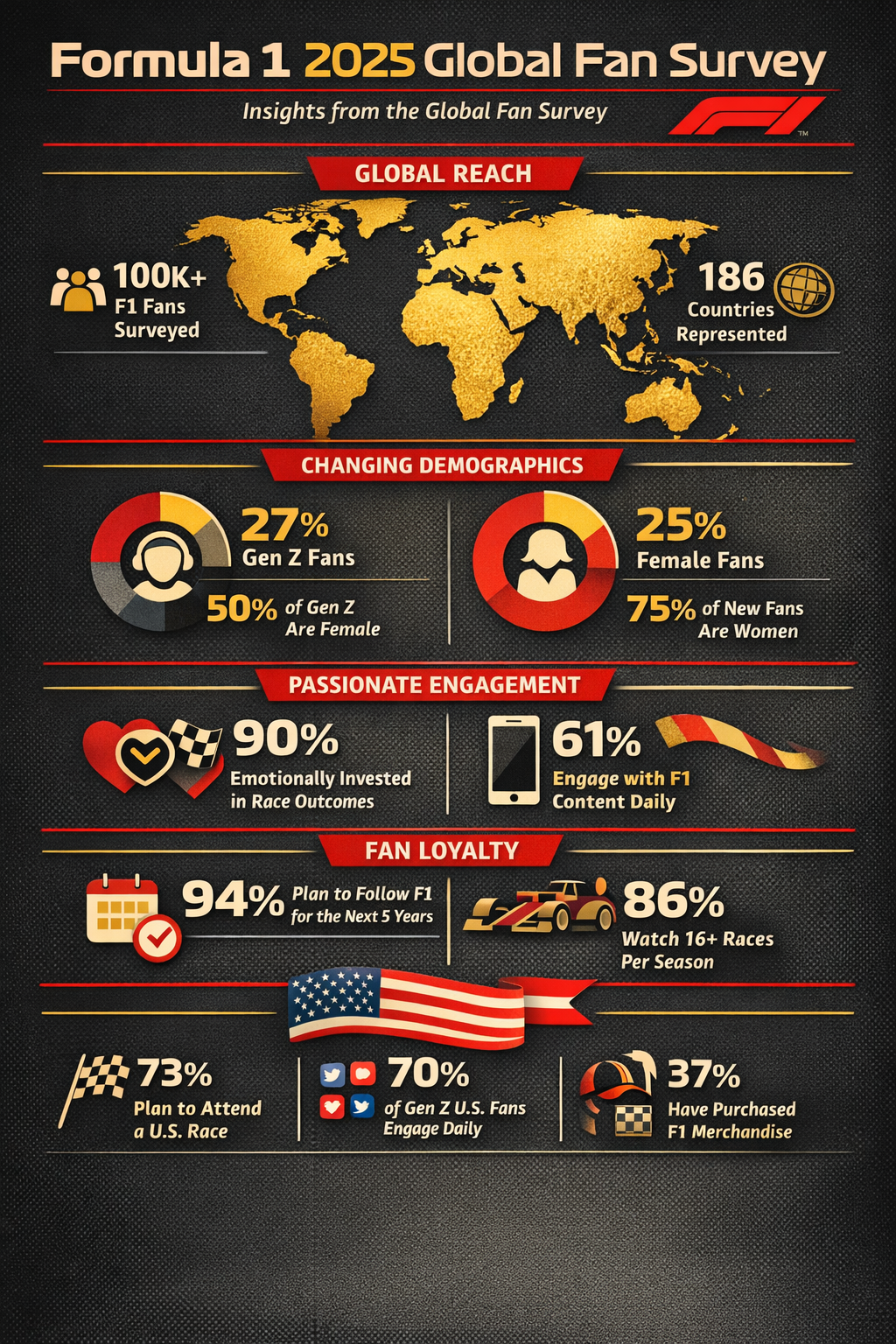
Statistics provided by: Formula 1 and Motorsport Network unveil 2025 Global Fan Survey
However, F1’s expansion into new communication channels (most notably through Netflix’s Drive to Survive, now seven seasons strong) has reshaped the sport’s appeal. The series has pulled in a massive wave of female fans by presenting F1 as a character‑driven narrative that highlights rivalries, personal stories, and emotional depth behind the races.
Recent data confirms this shift: women are now one of the most influential and fastest‑growing segments of the F1 audience.
Formula 1 now stands as one of the most visible sports on social media, with massive global reach and following. For business owners, this serves as a key reminder: focusing too narrowly on a single demographic can limit growth potential. Women drive most global consumer spending through both purchasing power and influence. By marketing only one segment, your business might overlook opportunities to expand and increase sales, so instead of becoming more exclusive, think about who you can reach.
